Key results
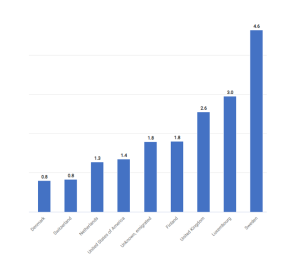
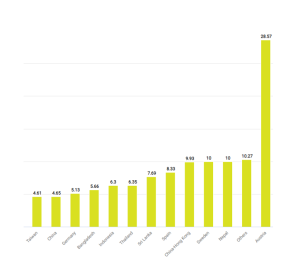
- 27% of the total market value of Dubai properties is foreign-owned—at least USD 146 billion.
- The value of Dubai real estate owned through other tax havens is disproportionate to their GDP: Saint Kitts and Nevis (141%), British Virgin Islands (37%), and Seychelles (19%).
- Properties owned by tax havens tend to be more expensive on average than other foreign-owned properties.
- The probability of owning offshore real estate rises with wealth, including within the very top of the wealth distribution.
- About 70% of Dubai properties owned by Norwegian taxpayers were not reported for tax purposes in 2019.
Data
The paper builds on two datasets:
- A micro-dataset capturing the ownership of about 800,000 properties in Dubai provided by confidential sources (private records compiled by UAE-based professionals in the real estate and property industry) to the Center for Advanced Defense Studies, a US nonprofit organization dedicated to analyzing and reporting conflict and security issues worldwide.
- Norwegian administrative tax record data delivered by Statistics Norway and contained detailed information on income and wealth from the individual tax statements. The final sample of Norwegian property owners in Dubai included 172 tax residents.
Methodology
The properties were linked to the owner’s country using nationality, which is more readily observable than residency. As the data included corporate and private owners, it was matched with the publicly available ICIJ offshore leaks database to identify the beneficial owner of firms. About 7% of all owners (who owned 19% of the properties in value) had untraceable nationality.
By matching properties owned by Norwegians to administrative tax records in Norway, the authors estimated the wealth distribution among property owners.
Go to the original article
The working paper can be downloaded from the
International Tax Observatory website. [
PDF]