Key results
- Overall, 2% of Norwegian real estate assets were owned by foreigners in 2017.
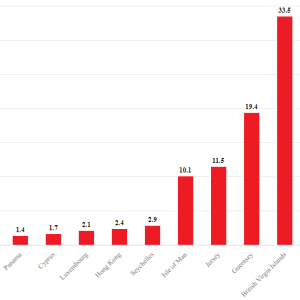
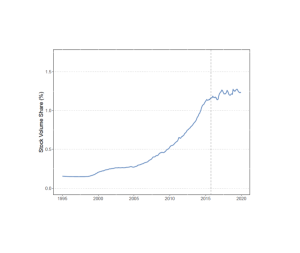
- Foreign ownership through tax havens has increased over the last decade.
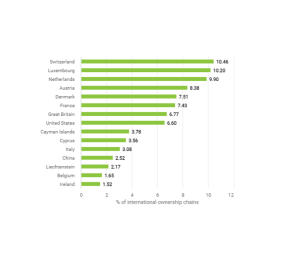
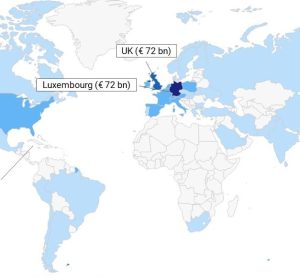
- When ranking foreign ownership by nominal values, half of the top 18 jurisdictions are well-known tax havens, with Luxembourg accounting for more than half of tax haven ownership.
Data
The authors employ Norwegian administrative data covering all Norwegian properties for the period of 2011–2017. Due to Norway’s wealth tax (and the resultant tax returns), it is possible to track the general wealth of the population, including real estate assets. The estimated market values of real estate are calculated by the tax administration, which utilizes standardized and objective valuation methods.
The key limitation of the data is that it is not possible to follow the ownership chains after the immediate foreign owner. The foreign companies that own Norwegian real estate may as well be owned by residents of other countries, including Norway. This means that the analysis is not necessarily able to demonstrate the real country distribution of the ultimate owners. Instead, it shows the country distribution of ownership that is visible to Norwegian authorities and to the general public.
Methodology
Residents and corporations have unique identifiers within Norwegian administrative data, making it possible to follow individuals and non-listed corporations over time and across datasets. The corporations and individuals were merged through the shareholder register, which contains information on all Norwegian and foreign shareholders of Norwegian companies, including the exact ownership share at year-end status.
The full coverage of shareholders in Norwegian companies makes it possible to map ownership and observe the group structures and chains of holding and shell companies, in a bid to assign the ownership to the ultimate owners of companies (or in the case of foreign owners, the immediate foreign owner).
Go to the original article
The working paper can be downloaded from the
International Tax Observatory website. [
PDF]