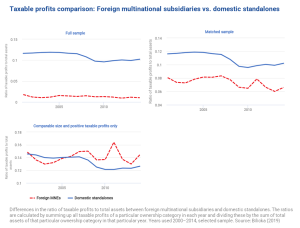
Comparing UK tax returns of foreign multinationals to matched domestic firms
Research by Bilicka 2019
Research by Collin 2021
Summary
Collin uses leaked data from a bank incorporated at the Isle of Man to study the characteristics of individuals and companies holding wealth in tax havens. The dataset includes customer records and account movements, registered beneficial owners, as well as registers of politically exposed persons and high-profile individuals maintained by the bank. Based on these unique data, the author reports key descriptive statistics such as the average amount of wealth held, a breakdown of deposits by client type and by location of clients and beneficial owners. It was found that the majority of deposits are held by companies and trusts rather than individuals. Approximately 50% of individuals, 84% of companies, and nearly every trust are registered in tax havens. Collin suggests that the majority of company clients are shell companies and holding companies for financial assets rather than active companies. He derives this conclusion by matching company clients to the banks’ classification of whether or not a company would be reportable for FATCA or the CRS. However, this information is not available for all companies. The fact that 55% of company clients in the data share the same seven addresses on the Isle of Man, Cayman Islands, British Virgin Islands, or the UK provides further support to the view that most of them are shell companies. The paper provides empirical evidence that individuals who own offshore wealth are more likely to be wealthy individuals and politically influential people from high income countries. It also demonstrates that common data sources on offshore wealth and existing estimates might be distorted because tax haven deposits are erroneously attributed to tax haven residents while their beneficial owners are actually located in other countries.Key results
Data
This paper relies on account data leaked from the Cayman National Bank and Trust, Isle of Man (CNBIOM), a subsidiary of the Cayman National Corporation. It was retrieved by a hacker collective and published online by a journalist collective in November 2019. The data contains customer records, of both individuals and companies, from 2008 to 2019. It includes monthly account balances for approximately 4,500 clients and details about each client, such as correspondence addresses and registered beneficial owners (for companies). In addition to customer records, the author had access to two unique sets of files:
Research by Bilicka 2019
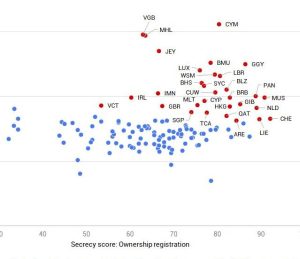
Report by the Global Alliance for Tax Justice, Public Services International, and the Tax Justice Network
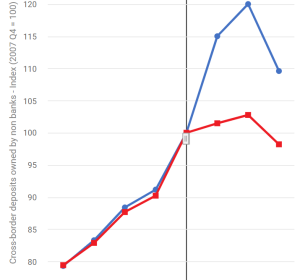
Research by Johannesen and Stolper 2017
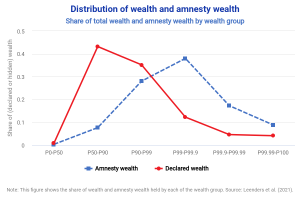
Research by Leenders, Lejour, Rabaté and van’t Riet 2020